
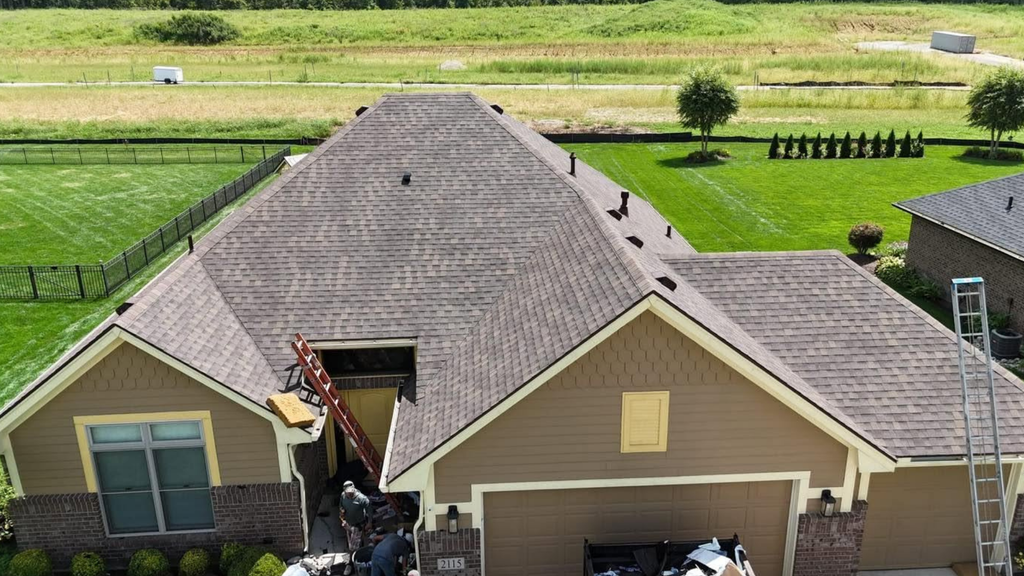
Proper attic ventilation is an important part of maintaining a healthy roofing system. Without enough airflow, heat and moisture can become trapped inside the attic, potentially contributing to shingle deterioration, condensation, mold growth, and damaged insulation. For homeowners considering ventilation improvements, understanding the differences between ridge vents vs gable vents can make it easier to choose the right solution.
In this guide, we’ll compare ridge vents vs gable vents, explain their advantages and limitations, and discuss what homeowners should consider before choosing a ventilation system.
Why Attic Ventilation Matters
Attic ventilation helps move hot, humid air out of the attic while allowing fresh air to enter. A properly designed system typically combines intake ventilation, such as soffit vents, with exhaust ventilation.
Good attic ventilation can help:
• Reduce excessive attic heat
• Control moisture and condensation
• Protect roof decking
• Support insulation performance
• Reduce the risk of mold
• Help extend roofing material life
• Improve overall attic conditions
When comparing ridge vents vs gable vents, homeowners should first understand that effective ventilation depends on balanced airflow rather than simply installing more exhaust vents.
What Are Ridge Vents?
Ridge vents are installed along the highest point of a sloped roof. They provide a continuous exhaust opening that allows warm air to leave the attic naturally.
When paired with soffit or other intake vents, ridge vents create a natural airflow path. Cooler outside air enters through the lower portions of the attic while warm air rises and exits through the ridge.
This design is one of the biggest reasons ridge vents vs gable vents is an important comparison for homeowners.
Benefits of Ridge Vents
Ridge vents offer several advantages for many residential roofing systems.
Benefits include:
• Continuous ventilation along the roof ridge
• Low-profile appearance
• No powered electricity required
• Natural airflow
• Integration with many shingle roofing systems
• Reduced visual impact
Because they are installed along the roof’s highest point, ridge vents can provide consistent exhaust ventilation when properly designed. They are often added during a full roof replacement, when the ridge is already open and the vent can be integrated cleanly.
For many homes, ridge vents vs gable vents ultimately comes down to roof configuration and whether continuous ridge ventilation is practical.
What Are Gable Vents?
Gable vents are installed in the walls at the gable ends of a home. They allow air to move through the attic horizontally.
Depending on the home’s design and weather conditions, gable vents can allow warm air to escape while outside air enters through another opening.
Gable vents have been used for many years and can be effective when properly positioned and combined with adequate intake ventilation.
However, the performance differences between ridge vents vs gable vents can become significant depending on attic layout.
Benefits of Gable Vents
Gable vents can offer several advantages.
These include:
• Straightforward installation in suitable homes
• Attractive architectural appearance
• Ability to provide cross-ventilation
• No electrical power required for passive models
• Compatibility with certain older roofing designs
Gable vents can be especially useful when a home already has appropriately designed gable openings.
Ridge Vents vs Gable Vents: How Airflow Differs
The primary difference between ridge vents vs gable vents is the direction and location of airflow.
Ridge vents exhaust air vertically through the highest portion of the roof. Gable vents move air through openings positioned on opposite or adjacent gable walls.
Ridge ventilation can provide a more direct escape route for rising hot air. Gable ventilation relies more heavily on wind and cross-airflow through the attic.
The effectiveness of either system depends on the home’s construction and the availability of adequate intake ventilation.
Which Provides Better Ventilation?
There is no single answer for every home when comparing ridge vents vs gable vents.
Ridge vents are often highly effective when paired with properly installed soffit vents because they create a balanced intake-and-exhaust system.
Gable vents may work well in homes designed around cross-ventilation, particularly when the attic layout allows air to move freely from one side to another.
A professional evaluation can determine which system is more appropriate for your roof.
The Importance of Intake Ventilation
One of the most important factors in the ridge vents vs gable vents discussion is intake airflow.
Exhaust vents cannot perform efficiently if there is not enough fresh air entering the attic.
Common intake vents include:
• Soffit vents
• Eave vents
• Fascia vents
Blocked or inadequate intake vents can reduce the performance of both ridge and gable ventilation.
Can Ridge and Gable Vents Be Used Together?
Homeowners sometimes assume that adding more exhaust vents automatically improves attic ventilation. However, combining different exhaust systems without proper planning can actually interfere with airflow.
Using ridge vents and gable vents together may create competing airflow paths or cause air to enter through one exhaust opening instead of through the intended intake vents.
When evaluating ridge vents vs gable vents, it’s important to design the system as a whole rather than simply adding additional vents.
Appearance and Roof Design
Aesthetic considerations may also influence the decision.
Ridge vents typically have a low-profile appearance and can blend into the roofline. Gable vents are more visible because they are located on exterior walls.
For homeowners concerned about curb appeal, ridge vents vs gable vents may involve balancing ventilation performance with architectural preferences.
Maintenance Requirements
Both ventilation systems require periodic inspection and maintenance.
Homeowners should check for:
• Damaged vent components
• Pest activity
• Debris buildup
• Blocked openings
• Water intrusion
• Deteriorated screens
Regular maintenance helps ensure that the chosen system continues to perform effectively.
Signs Your Attic Ventilation Needs Improvement
Regardless of whether you choose ridge or gable ventilation, homeowners should watch for potential ventilation problems.
Warning signs include:
• Excessive attic heat
• Condensation
• Mold or mildew
• Musty odors
• Rusted nails
• Damaged insulation
• Premature shingle deterioration
These conditions may indicate that the current ventilation system needs professional evaluation.
How Professionals Evaluate Ventilation
At Kerrigan Roofing and Restoration, we look beyond the type of vent installed when evaluating homes in Powell and surrounding communities.
Our evaluation may consider:
• Roof design
• Attic size
• Existing intake vents
• Exhaust locations
• Insulation placement
• Moisture levels
• Roof decking condition
• Airflow pathways
This comprehensive approach helps homeowners make an informed decision when comparing ridge vents vs gable vents.
Choosing the Right Ventilation System
When deciding between ridge vents vs gable vents, homeowners should consider:
• Roof architecture
• Attic configuration
• Existing ventilation
• Intake capacity
• Local weather conditions
• Appearance
• Installation requirements
• Long-term maintenance
The most effective solution is the one that creates balanced airflow throughout the entire attic.
Why Choose Kerrigan Roofing and Restoration
Homeowners trust Kerrigan Roofing and Restoration for professional roofing inspections, repairs, maintenance, and ventilation solutions.
We provide:
• Comprehensive roof inspections
• Attic ventilation evaluations
• Ridge and gable vent installation
• Ventilation improvement recommendations
• Roof repair services
• Quality roofing materials
• Professional workmanship
• Reliable customer service
Our experienced team can help homeowners understand the differences between ridge vents vs gable vents and determine which ventilation approach best suits their property.
Final Thoughts
When comparing ridge vents vs gable vents, homeowners should focus on more than the appearance or location of the vents. Effective attic ventilation depends on balanced intake and exhaust airflow, proper installation, and a system that works with the home’s specific roof design.
Ridge vents can provide continuous exhaust ventilation along the roof peak, while gable vents can support cross-ventilation through the attic. Neither option is automatically better for every home.